Claim your deposit from your landlord in Ireland
How to claim your landlord's rental deposit in Ireland, you have two options
04/Mar/2024
Administration
If the landlord lives in the house

If you live with the landlord or Landlady of the house, you are a "Licensee" (not a Tenant), and you must sue him using the Small Claims procedure of the District Court. It costs €25, and no lawyer is needed.
How to make a small claim online
You must create an account on the Courts Service Online (CSOL) system before submitting an online application.
On CSOL, you will be able to track the status of your claim.
In order to pay the €25 application cost, you will also need a credit/debit card and an email address.
Click here to Apply online
How to make a small claim manually
You must get in touch with the local District Court office located where
- The responder either lives or works or
- The agreement was reached, or
- Where the harm occurred in the event of property damage.
You may download the Small Claims Application form or give it to you by the Small Claims Registrar.
The Small Claims Registrar in the appropriate region should receive the completed application form and the required fee.
If the landlord does not live in the house
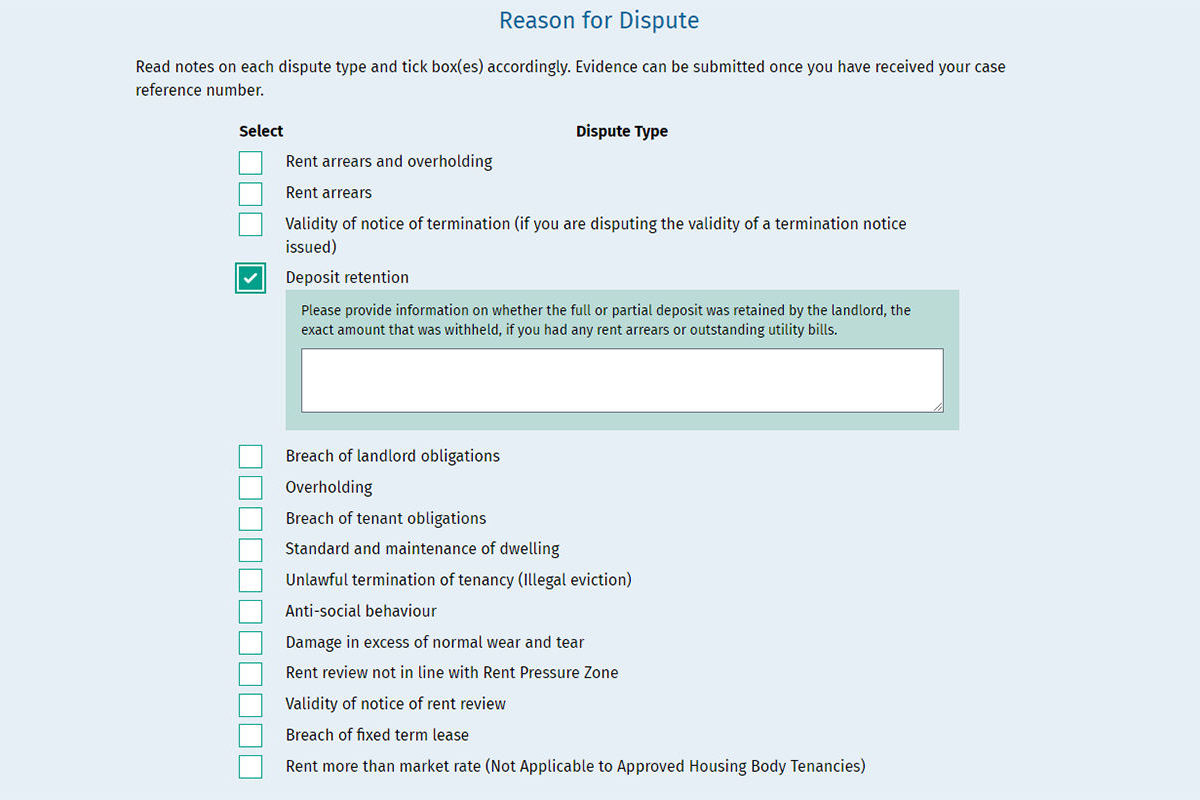
If you do not live with your landlord/landlady of the house, you can open a dispute directly with the RTB (Residential Tenancies Board).
You must select the option "Deposit retention".
Your rights as a private tenant in Ireland
- You have the right to enjoy your house in peace. Ask your neighbours or other renters to cease making noise if it’s upsetting you, and let your landlord know. You have the option to file a formal complaint if this doesn’t work.
- You have a right to accommodations that meet a minimal level.
- It is your right to have a rent book.
- At any acceptable moment, you are free to get in touch with the landlord or their representative. Additionally, you have the right to know their accurate contact details, including phone numbers, email addresses, and postal addresses.
- Only with your consent may your landlord access your house. Unless there is an emergency, you should arrange for your landlord to examine or repair the property.
- If you do any repairs that belong to the landlord, you have the right to reimbursement.
- Unless otherwise stated in your leasing agreement, you are free to host overnight or brief visits from guests. If you have a second tenant coming in, you need to let your landlord know.
- If your tenancy ends, you are entitled to a certain amount of notice.
- If your landlord wishes to review the rent, they must give you at least ninety days’ notice. The frequency of this review is governed by regulations.
- You are not fined if you bring any problems to the attention of the Residential Tenancies Board (RTB).
- Any register entry the RTB holds about your tenancy is subject to a copy request.
- A Building Energy Rating (BER), which indicates the home’s energy efficiency, is required for all rental properties.